It is July 4th in the US—a time to relax, reflect, and think about the future. Today, I want to share my thoughts about OpenBOM Technological Choices, Gartner’s 30 Emerging Technologies, and the roles of data in your manufacturing company’s business future.
Timing is everything, especially when starting a business. One of my favorite quotes by Nathan Myhrvold, former CTO of Microsoft, resonates deeply with me: “If you want to have a great future, you have to think about it in the present, because when the future’s here, you won’t have the time.”
When we started OpenBOM, we built our foundation on five key elements: data, graph models, openness, collaboration, and multi-tenant scale. It was challenging to predict how technological paths would collide, but I believed these elements were crucial for building a new platform for engineering and manufacturing.
Gartner’s 30 Emerging Technologies
Earlier today, I came across Gartner’s article on 30 emerging technologies that will guide your business decisions. You can read the article here.
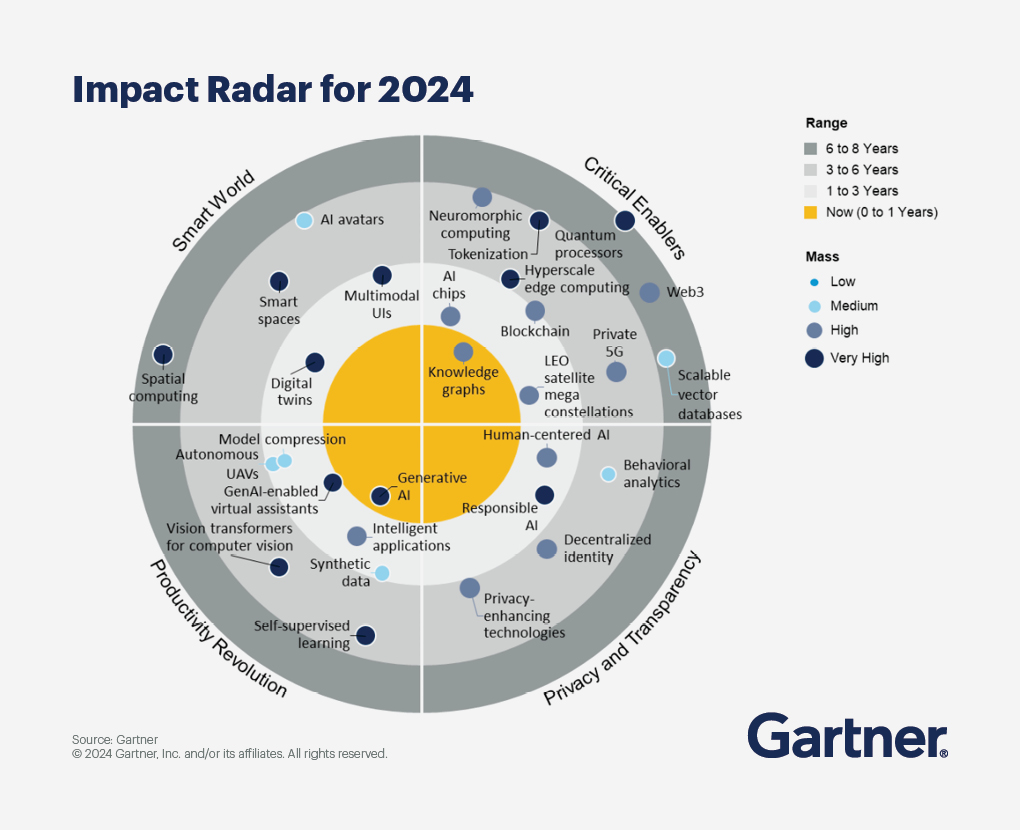
Here are some key takeaways:
- Digital Twins
- Intelligent Applications
- Knowledge Graphs (KG)
These technologies align with the foundational elements of OpenBOM, reinforcing the choices we made when started OpenBOM.
Hiding the Technology, Show Problem Solving
Generally, our customers— engineering teams and manufacturing companies—are not interested in the technologies themselves. No one wakes up in the morning with the intention to “buy technology.” Everyone wants to solve problems. This is why we started OpenBOM by focusing on problems. In my article earlier this month, I discussed the problems OpenBOM solves. You can read it here.
OpenBOM addresses several critical issues:
- Data Organization Challenges in Engineering and Manufacturing
- Organizing Product Development Processes and Connecting Engineering with Procurement
- Organizing Change Management Processes
Transforming Data and Processes
We are approaching a point where the data and processes we organize for our customers can be transformed using the foundational technologies we employ, enhancing decision-making processes.
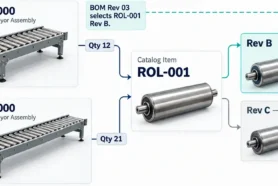
OpenBOM’s data management foundation allows us to manage data granularly, organize relationships using graphs, and make information easily accessible. This transformation can help:
- Answer Questions About Your Product, Components, Physical Characteristics, etc.
- Recommend Components and Suppliers
- Identify Problems, Not Ordered Components, Wrong Suppliers, etc.
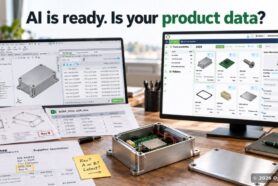
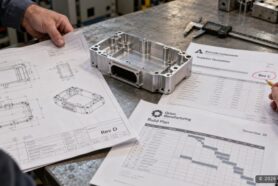
You need to think about the data today. Tomorrow will be too late. An average engineering and manufacturing business is thinking about data structures as folders of files, Excel export, and trying to dumb it down to the level data was used for the last 30 years. This is fine if you want to continue doing the same as you did for the last 30 years. But I bet money you want to be smarter, to make smarter decisions using accurate information. Therefore you need to think about your data today.
Conclusion
The importance of data cannot be overstated in the modern world. Engineering and manufacturing are reaching a point where data can be reused for better decision-making. This is difficult to achieve when data is stored in Excel sheets or legacy databases. Manufacturing companies must find the time to think about data management. For further insights, check out my article Why Manufacturing Companies Are Too Busy To Think about Data Management here.
Think about your data today, because tomorrow might be too late. Data is the goldmine of your company and the source of future profits and businesses.
REGISTER FOR FREE to check how OpenBOM can help you.
Best, Oleg
Join our newsletter to receive a weekly portion of news, articles, and tips about OpenBOM and our community.